On this page
I’ve tested enough pens, nibs, and inks to know this question matters more than it first appears. You switch to premium paper, uncap a fountain pen you trust, and still get fuzzy lines that spread past the stroke. That usually feels backward. If the paper is supposed to be better, why does your writing still feather?
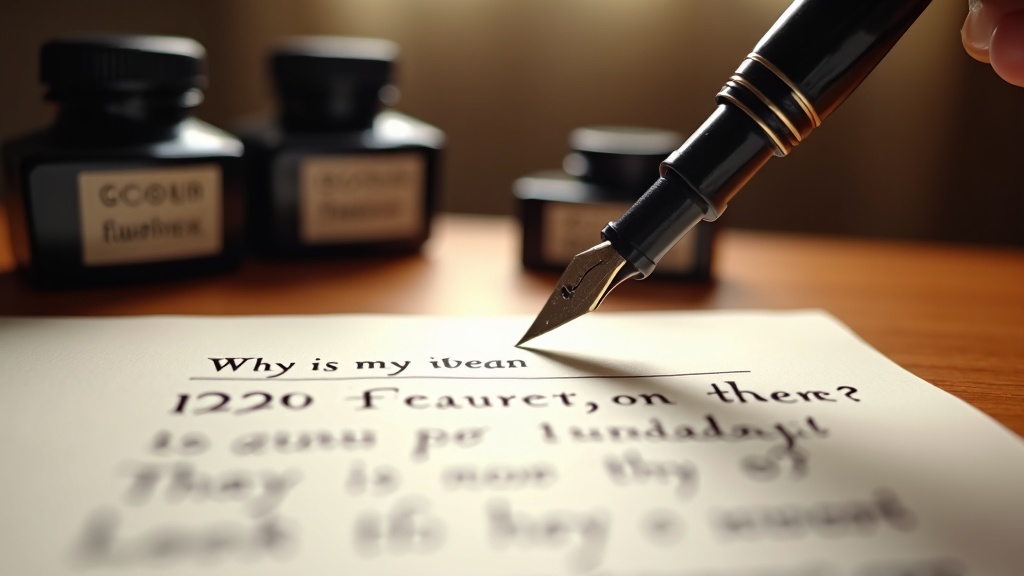
If you’re trying to make a smart choice instead of buying twice, in most cases, feathering on high-quality paper is not caused by one bad component. It is the result of an ink-paper-pen combination that is too wet for that specific sheet. “High-quality” can mean smooth, thick, archival, bright white, or expensive, but it does not always mean fountain pen friendly.
The Short Answer
Your fountain pen feathers on high-quality paper because the paper may be good for general writing or printing, but still too absorbent, too loosely sized, or too textured for your ink flow. A wet nib, lubricated ink, or heavy writing pressure can push the combination over the edge.
When I troubleshoot feathering, I assume the paper is only one variable. I check the ink first, then the nib width and flow, then whether the paper is genuinely fountain pen safe rather than simply premium office paper or stationery.
Why This Matters More Than Most Beginners Think
Feathering is not just a cosmetic issue. It changes how a pen feels on the page and how legible your writing looks after the ink dries.
- Fine nibs can start writing more like mediums because the edges of each line spread outward.
- Letters lose crisp internal space, so loops, cross-strokes, and small print become harder to read.
- Dry times often increase unevenly, which can lead to smearing even when the page looks finished.
- Many writers blame the pen and start chasing new nibs when the real problem is the pairing.
That matters because the wrong conclusion gets expensive fast. Before replacing a pen or abandoning an ink, it is worth isolating which part of the setup is actually causing the spread.
The reason this topic matters is that nib size quietly changes almost everything a beginner notices first: smoothness, control, ink flow, dry time, and how forgiving the pen feels on ordinary paper. People often assume nib width is just a style preference, but in practice it changes the whole learning curve.
I have also found that beginners blame the pen when the real mismatch is width versus paper or width versus handwriting size. A nib that feels expressive to one person can feel messy, slow-drying, or oddly broad to someone who writes smaller or uses cheap office paper every day.
That is why I treat nib size as a practical fit question, not a collector trivia question. The right width makes the pen easier to trust, which is a big deal when you are still deciding whether fountain pens are enjoyable enough to keep using.
What I Look for First
When someone is buying their first setup, I would rather they compare fountain pen paper and fountain pen notebooks than chase random luxury-looking listings that do not teach them what they actually like.
If a supposedly nice paper feathers, I look for clues that tell me whether the page is absorbing too much ink or the pen is simply delivering too much of it.
- Whether the feathering happens with every ink or only with one especially saturated or lubricated bottle.
- Whether the problem appears on downstrokes only, which often points to a wet nib or a heavy hand.
- Whether there is also bleedthrough or showthrough, which suggests the sheet is more absorbent than it looks.
- Whether the packaging actually mentions fountain pens, sizing, or low absorbency instead of just weight and brightness.
A thick 120 gsm sheet can still feather if its surface treatment is wrong, while a thinner notebook paper can behave beautifully if it is properly sized. Weight and price are weak predictors on their own.
How to Choose Without Overbuying
You do not need to buy the most expensive notebook in the store. You need paper that controls ink, plus a pen-and-ink setup that is not excessively wet for your writing style.
- Test one known tame ink before changing anything else, ideally a well-behaved blue or blue-black with a reputation for clean edges.
- Try the same page with a finer or drier pen to see whether the feathering drops immediately.
- Look for papers with a track record among fountain pen users rather than relying on luxury branding or paper weight.
- Buy small formats or sample packs first so you can compare several papers without committing to a full stack.
This approach keeps you from solving a flow problem with a paper purchase, or a paper problem with another pen. A few controlled comparisons tell you more than a shelf full of unopened notebooks.
If you are buying blind, I think the smartest move is to choose the nib that solves your most common writing problem instead of the one that looks most interesting online. For many beginners that means a fine or medium nib from a reliable brand, because it leaves room to learn without locking you into a fussy setup.
I would also avoid treating a first pen like a forever pen. Your first good fountain pen should teach you what you notice: line width, feedback, ink flow, grip comfort, and paper sensitivity. Once you know which of those bothers or delights you, later purchases get much smarter and usually cheaper.
That is also why I rarely recommend chasing gold nib mystique or boutique hype right away. A well-tuned beginner steel nib can teach you more about your preferences than an expensive pen you are too nervous to use hard enough to learn from.
Common Mistakes and Misconceptions
The biggest misconception is that expensive paper must be fountain pen paper. Many premium sheets are designed for pencils, rollerballs, invitations, or printers, not liquid ink that stays wet long enough to spread along the fibers.
The next mistake is assuming feathering means the nib is defective. Some pens are tuned wet on purpose, and some inks are formulated to look rich and saturated at the cost of sharper edges. That is not automatically a flaw. It just means the pairing needs to be matched more carefully.
The biggest misconception is that broader always means smoother and therefore better. Broader nibs can feel smoother, but they also dump more ink, show more paper weakness, and create longer dry times. That tradeoff is worth it for some writers and deeply annoying for others.
Another mistake is trusting brand labels as if every fine or medium were standardized. They are not. A Japanese fine can feel closer to a Western extra-fine, and two medium nibs from different makers can still land in very different places on the page. That is why example use cases matter more than marketing words.
I also think people underestimate how much ink choice changes the perception of nib size. A wet ink in a medium nib can behave more broadly than expected, while a drier ink can calm down a pen that initially feels too generous.
Bottom Line
If your fountain pen is feathering even on high-quality paper, the most likely explanation is that the paper is high quality in a general sense, not specifically optimized for fountain pen ink. The pen’s flow and the ink’s behavior still matter just as much.
Start with controlled tests: one different ink, one different paper, and if possible one finer or drier pen. Once you isolate the variable, the fix is usually simple, and you can get back to crisp lines without replacing your whole setup.
If you want the safest beginner answer, I would still lean fine or medium before anything more extreme. Those widths usually give you enough character to enjoy the pen without forcing you to manage every downside at once.
From there, the smartest upgrade path is not buying more expensive immediately. It is noticing whether you want a cleaner line, more expressive ink behavior, less feedback, or more control on cheap paper. Once you know which direction you want to move, choosing the next nib size becomes dramatically easier.
Extra Context That Changes the Decision
I also think the wrong choice usually comes from chasing one spec in isolation. In practice, nib feel, dry time, paper tolerance, maintenance burden, and total cost all interact, so I prefer to weigh them together before I recommend anything.
That is why I keep coming back to fit and tradeoffs instead of one-size-fits-all advice. A pen or ink can be technically good and still be wrong for the way you actually write, the paper you use most, or the amount of maintenance you are willing to do.
What Changes the Answer in Real Use
The detail most beginners miss is that fountain-pen advice only sounds simple until you factor in handwriting pressure, paper quality, nib width, and how much maintenance you will actually tolerate. Those variables are why one recommendation can feel perfect for one person and annoying for another.
When I test pens or inks, I am usually asking which part of the experience will break first for a newer user: inconsistent starts, feathering on mediocre paper, grip discomfort, dry-time frustration, or refill hassle. That practical filter usually produces a better recommendation than chasing prestige or internet hype.
I also think beginners improve faster when they judge the whole setup rather than the pen in isolation. A conservative nib, decent paper, and predictable ink often teach you more in two weeks than a flashier pen that keeps introducing avoidable variables.
Scope, uncertainty & affiliate disclosure
Writing feel is personal. Product details can vary by version, and NibGuide does not imply that every item mentioned was personally purchased or tested.
Some links may be affiliate links. NibGuide may earn a commission at no added cost to you; this does not determine editorial conclusions.
Leave a Comment