On this page
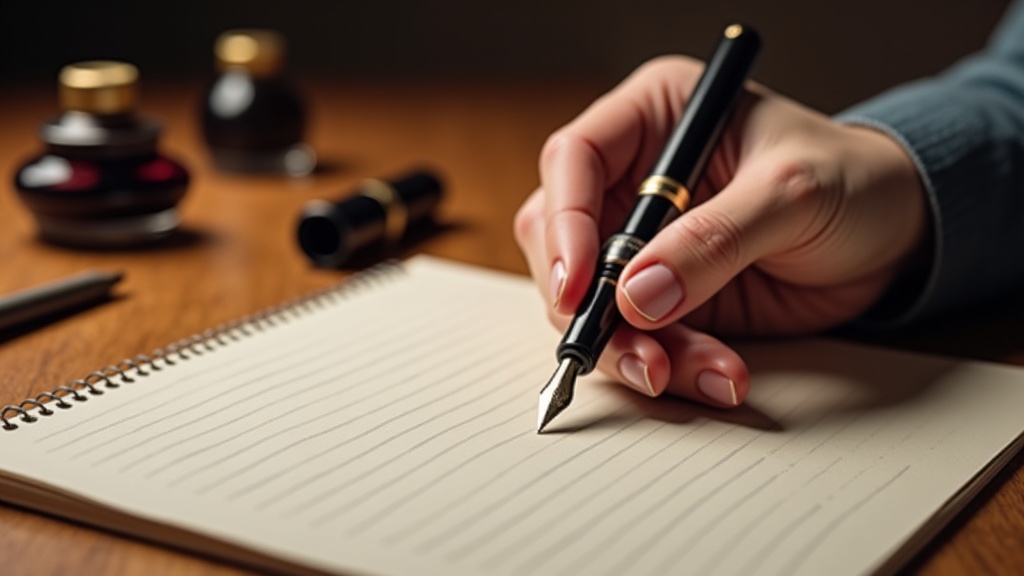
I tell beginners the same thing every time: if you want to know how to hold a fountain pen, use a relaxed tripod grip, keep the nib facing straight up, and let the pen sit at roughly a 40 to 55 degree angle to the paper. Do not squeeze it, and do not write like you are trying to force a ballpoint to start. After testing more than 200 pens over the last decade, I can say most “bad fountain pens” are really bad grip, bad paper, or too much pressure.
From a product design perspective, fountain pens are unusually honest tools. They expose tolerance issues, nib alignment problems, paper quality, and user habits fast. That is why beginners get confused: a fountain pen will not mask a twisted grip or a steep writing angle the way a gel pen can. If you set the grip correctly, even a modest starter pen like a Pilot Kakuno fountain pen or LAMY Safari fountain pen becomes much easier to judge fairly.
The Short Answer
Hold a fountain pen the way you would hold a pencil with a tripod grip: thumb and index finger pinching lightly, middle finger supporting underneath, grip section resting near the front of your fingers rather than buried deep in your hand. Keep the nib slit centered on top so both tines touch the page evenly. Most writers do best with the pen angled lower than a ballpoint, usually around 45 degrees. Guides from Goulet Pens and Cult Pens both describe that lower writing angle as the reliable starting point.
The other half of the answer is pressure: use less than you think. Fountain pens write through capillary flow, not pressure at the tip. JetPens teaches beginners to use a tripod grip and find the nib’s sweet spot, and that matches what I see in testing: when a pen feels scratchy, skipping, or oddly dry, I first check rotation and pressure before I blame the nib. I have had pens that felt mediocre at a steep angle and immediately smoothed out once I lowered the pen and stopped twisting the section.
| Problem | What to adjust first |
|---|---|
| Scratchy feel | Lower the angle slightly and make sure the nib is not rotated left or right |
| Skipping | Relax your grip and keep both nib tines evenly on the paper |
| Hand fatigue | Stop squeezing; let the pen’s weight and ink flow do the work |
| Smearing | Use a finer nib, faster-drying ink, or more fountain-pen-friendly paper |
Why This Matters More Than Most Beginners Think
Beginners usually assume grip is a comfort issue. It is more than that. The way you hold a fountain pen changes line consistency, ink flow, dry time, and whether the nib feels smooth or annoying. A ballpoint tolerates abuse. A fountain pen is more precise, which is exactly why good technique matters early.
- A fountain pen nib has a real sweet spot, so small changes in rotation can make the pen feel smooth one second and scratchy the next; Goulet specifically warns new users to watch pen rotation because it affects ink flow.
- Most nibs work best at a moderate angle, not vertical. If you come from ballpoints, you may be holding the pen too upright without realizing it, which can starve the nib or make feedback feel harsher.
- Pressure changes performance more than beginners expect. Excess force can spread the tines, increase scratchiness, and in extreme cases damage a nib that was never meant to behave like a flex pen.
- Your grip also changes how wet the page gets. Left-handed writers and fast note-takers especially benefit from a controlled angle, a lighter hand, and paper that resists feathering and smear.
I have seen this over and over in side-by-side testing. On decent paper, a cheap starter pen can feel surprisingly refined when the grip is right. On bad paper with a twisted grip, even a much better pen can seem unreliable. Parker’s care guidance also reinforces the broader point that fountain pens are sensitive tools: orientation and handling affect how consistently they write and how well they stay primed between uses.
The reason this topic matters is that nib size quietly changes almost everything a beginner notices first: smoothness, control, ink flow, dry time, and how forgiving the pen feels on ordinary paper. People often assume nib width is just a style preference, but in practice it changes the whole learning curve.
I have also found that beginners blame the pen when the real mismatch is width versus paper or width versus handwriting size. A nib that feels expressive to one person can feel messy, slow-drying, or oddly broad to someone who writes smaller or uses cheap office paper every day.
That is why I treat nib size as a practical fit question, not a collector trivia question. The right width makes the pen easier to trust, which is a big deal when you are still deciding whether fountain pens are enjoyable enough to keep using.
What I Look for First
When someone says a fountain pen “doesn’t write right,” I do not start with the ink brand or some mystical nib lore. I watch how they hold it. These are the first four things I check because they solve most beginner problems faster than buying another pen.
- Nib orientation: the top of the nib should face the ceiling, not rolled off to one side. If the pen rotates in your grip, one tine can lift and the ink flow gets inconsistent.
- Grip pressure: your fingers should control the pen, not clamp it. If your fingertips whiten or your hand tires out after a page, you are gripping too hard.
- Writing angle: start around 45 degrees, then adjust slightly. Goulet suggests most nibs are happiest around 45 to 55 degrees, which is also where many starter nibs feel smoothest in my own use.
- Contact point on the page: both tines need to touch the paper evenly. If you tilt the nib so one side leads, the pen can feel sharp even when the nib is perfectly fine.
That is also why I like beginner pens with obvious ergonomic cues. The triangular grip on the LAMY Safari fountain pen can teach finger placement quickly, while the smiley-face nib on the Pilot Kakuno fountain pen makes nib orientation almost foolproof. Those are not collector trophies, but they are smart tools for learning what correct grip actually feels like. My blunt verdict after years of testing: a pen that teaches alignment is more valuable to a beginner than a prettier pen with a slippery metal section.
My first filter is handwriting size. If you naturally write small, cramped notes, a broad wet nib usually makes life harder before it makes anything more beautiful. If you write bigger, slower, or more expressively, a fine nib can feel a little too restrained unless the paper is poor enough to demand it.
I also pay close attention to paper quality because nib size and paper behave as a pair. A medium nib on Rhodia or Tomoe River can feel controlled and generous, while the same nib on cheap copier paper may feather enough to make the line look clumsy. That is not the nib lying to you. It is the surface exposing the tradeoff.
The third thing I look at is how much patience the writer has for dry time and ink management. People who want neat, fast notes with minimal fuss usually do better starting narrower. People who want more shading, softer feel, and a little more personality on the page can usually tolerate going wider.
How to Choose Without Overbuying
If you are still learning how to hold a fountain pen, do not solve the problem by buying a pile of pens. Buy one forgiving pen, one decent paper option, and enough ink to practice consistently. Technique stabilizes faster when variables stay under control.
- Choose a forgiving nib size: fine or medium is the safe zone. Extra-fine can feel sharper on cheap paper, while broad nibs put down more ink and make smearing more obvious.
- Prioritize grip comfort over prestige: resin sections with a little texture are easier for most beginners than slick lacquered metal grips.
- Use fountain-pen-friendly paper: smoother, less absorbent paper shows you what the nib actually does. A pad like Rhodia dotPad paper is a much better testing surface than random office copy paper.
- Start with simple filling: cartridges are fine at first. If you want bottled ink later, add a converter or an easy piston filler after your grip and angle feel natural.
This is where beginners waste money. They think the next pen will solve a comfort issue that really comes from angle or paper. In my testing, paper quality changes the perceived smoothness of a pen more dramatically than many entry-level pen upgrades do. If you want one sensible add-on after the pen itself, I would buy better paper before I buy a second nib. A bottle-compatible starter like a fountain pen converter also makes sense once you know you enjoy the habit, but not before.
If you are buying blind, I think the smartest move is to choose the nib that solves your most common writing problem instead of the one that looks most interesting online. For many beginners that means a fine or medium nib from a reliable brand, because it leaves room to learn without locking you into a fussy setup.
I would also avoid treating a first pen like a forever pen. Your first good fountain pen should teach you what you notice: line width, feedback, ink flow, grip comfort, and paper sensitivity. Once you know which of those bothers or delights you, later purchases get much smarter and usually cheaper.
That is also why I rarely recommend chasing gold nib mystique or boutique hype right away. A well-tuned beginner steel nib can teach you more about your preferences than an expensive pen you are too nervous to use hard enough to learn from.
Common Mistakes and Misconceptions
The biggest mistake is pressing too hard. A fountain pen should glide with very little force, and if you try to muscle ink onto the page the way you would with a dying ballpoint, the writing gets worse, not better. Another common mistake is holding the pen too upright. Beginners often come in around 70 degrees or more, then wonder why the nib feels stingy or scratchy. Lowering the pen usually helps immediately.
The second misconception is that there is one universal correct grip. There is not. The correct grip is the one that keeps the nib aligned, the pressure light, and the pen comfortable for a full page. Left-handed writers do not automatically need a special pen either. The Writing Desk makes this point clearly: many left-handed users do well with standard rounded nibs, while paper choice, nib width, and drying time often matter more than a label that says “left-handed.” I would add one more practical observation from testing: if you are overwriting or side-writing and fighting smears, switching to a fine nib and better paper usually helps faster than chasing novelty nibs or expensive inks. For daily notes, control beats romance.
The biggest misconception is that broader always means smoother and therefore better. Broader nibs can feel smoother, but they also dump more ink, show more paper weakness, and create longer dry times. That tradeoff is worth it for some writers and deeply annoying for others.
Another mistake is trusting brand labels as if every fine or medium were standardized. They are not. A Japanese fine can feel closer to a Western extra-fine, and two medium nibs from different makers can still land in very different places on the page. That is why example use cases matter more than marketing words.
I also think people underestimate how much ink choice changes the perception of nib size. A wet ink in a medium nib can behave more broadly than expected, while a drier ink can calm down a pen that initially feels too generous.
Bottom Line
If you want the clean beginner answer to how to hold a fountain pen, this is it: use a light tripod grip, keep the nib upright, write at about a 40 to 55 degree angle, and stop pressing. That setup gives the nib the best chance to stay in its sweet spot and lets you judge the pen honestly. It also makes it easier to tell whether a problem comes from the tool, the paper, or your technique.
My opinion after a decade of collecting is simple. Beginners do not need a rare nib or a complicated filling system to learn good fountain pen habits. They need one forgiving pen, decent paper, and enough patience to adjust grip before blaming the hardware. If you start there, even entry-level pens can feel excellent, and you will spend far less money correcting mistakes that were really just hand position.
If you want the safest beginner answer, I would still lean fine or medium before anything more extreme. Those widths usually give you enough character to enjoy the pen without forcing you to manage every downside at once.
From there, the smartest upgrade path is not buying more expensive immediately. It is noticing whether you want a cleaner line, more expressive ink behavior, less feedback, or more control on cheap paper. Once you know which direction you want to move, choosing the next nib size becomes dramatically easier.
Scope, uncertainty & affiliate disclosure
Writing feel is personal. Product details can vary by version, and NibGuide does not imply that every item mentioned was personally purchased or tested.
Some links may be affiliate links. NibGuide may earn a commission at no added cost to you; this does not determine editorial conclusions.
Leave a Comment