On this page
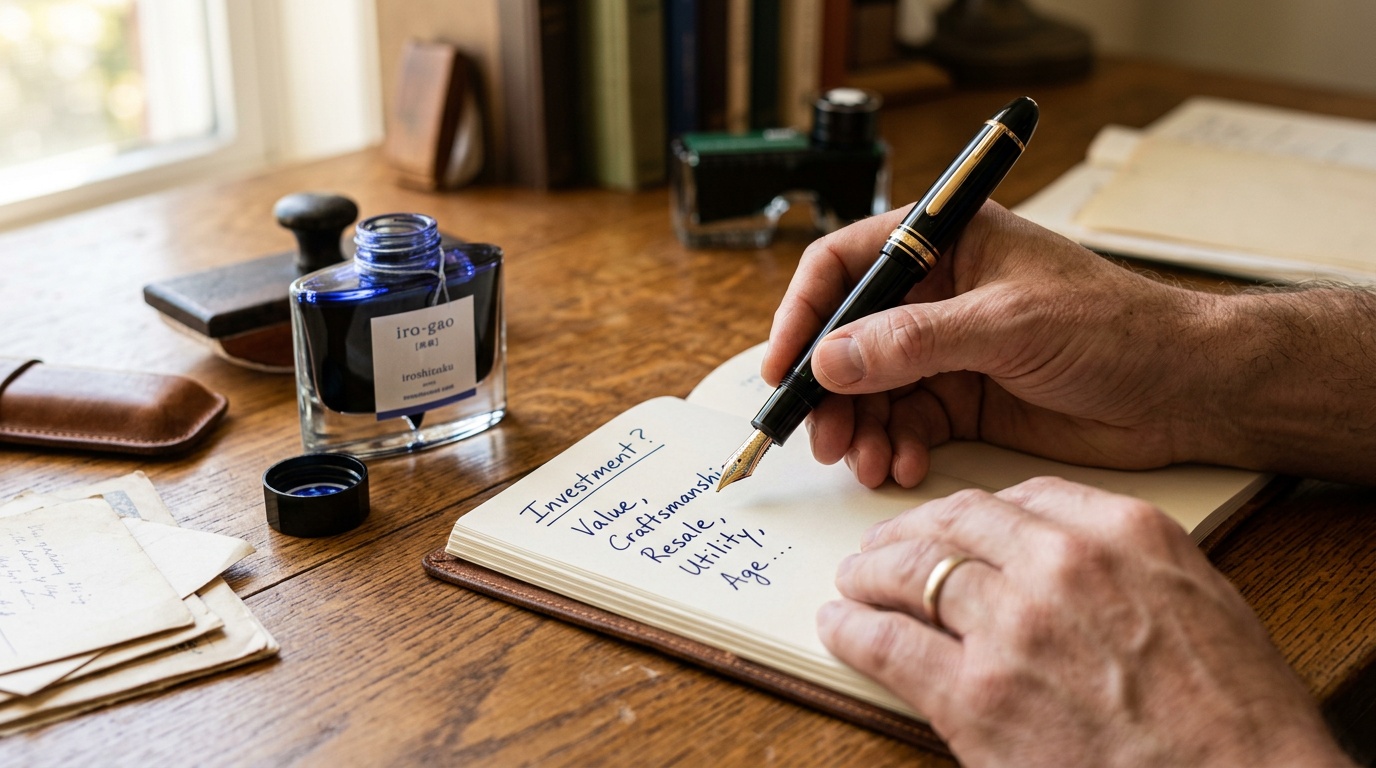
I would buy a fountain pen for years of comfortable writing, but I would not buy one expecting it to fund the next purchase. So, are fountain pens a good investment? Yes, when you mean a useful, refillable tool you enjoy using. As a way to make money, they are a speculative collectible. My product designer’s eye goes straight to the grip, cap seal, nib, and behavior on ordinary paper. A beautiful barrel cannot compensate for a pen that skips through a meeting.
The useful distinction is between spending more for a better writing experience and spending more because you hope someone else will eventually pay more. Beginners can get excellent everyday value without entering the collector market. The trick is to buy for the writing you actually do, budget for the whole setup, and treat any future resale proceeds as a bonus.
The Short Answer
A fountain pen earns its keep through repeated use. A comfortable grip, reliable ink flow, and a line width that suits your handwriting can make daily notes more pleasant. Refilling also lets you keep the same tool instead of replacing it when the ink runs out. None of that requires a gold nib, elaborate filling mechanism, or limited-edition finish. My verdict: reliability is worth paying for; decorative exclusivity is worth paying for only if you personally want it.
Financial appreciation is a separate question. Some collectible pens find enthusiastic buyers, but scarcity alone does not establish demand. Your eventual return depends on the purchase price, condition, authenticity, selling costs, and whether a buyer appears when you want to sell. For a beginner, the sensible spending assumption is that the money is spent. If the pen still feels worth owning with no resale proceeds, you are evaluating its practical value honestly.
Why This Matters More Than Most Beginners Think
Calling a pen an investment can make an unnecessary upgrade sound responsible. Before choosing a model, decide what you want the purchase to improve. There are four different kinds of value, and they should not share one mental price tag:
- Writing value: The pen starts promptly, fits your hand, and lays down a usable line without requiring pressure. This matters every time you write, even if nobody recognizes the brand.
- Ownership value: Refills are available, cleaning is manageable, and a damaged component can be repaired or replaced at a reasonable cost. A durable barrel is only one part of longevity.
- Enjoyment value: You like the object, the ink choices, or the routine of writing with it. That is a legitimate reason to spend money, provided it comes from your hobby budget.
- Resale value: Someone may buy it later. This is uncertain, and an impressive asking price is not evidence of a completed sale at that price.
Cost per use makes the distinction concrete. In a hypothetical example, a $40 pen and $20 in supplies used for 600 writing sessions cost ten cents per session, excluding later refills. A $300 pen used ten times costs $30 per session before supplies. These are illustrations, not market prices or lifespan promises. The point is that use changes the economics more reliably than prestige does. A cheaper ballpoint may still win on pure cost; the fountain pen needs to deliver something you actually appreciate.
The reason this topic matters is that nib size quietly changes almost everything a beginner notices first: smoothness, control, ink flow, dry time, and how forgiving the pen feels on ordinary paper. People often assume nib width is just a style preference, but in practice it changes the whole learning curve.
I have also found that beginners blame the pen when the real mismatch is width versus paper or width versus handwriting size. A nib that feels expressive to one person can feel messy, slow-drying, or oddly broad to someone who writes smaller or uses cheap office paper every day.
That is why I treat nib size as a practical fit question, not a collector trivia question. The right width makes the pen easier to trust, which is a big deal when you are still deciding whether fountain pens are enjoyable enough to keep using.
What I Look for First
I put the writing interface ahead of the material list. Weight, gold content, and machining can be interesting, but my buying checklist starts with the parts that determine whether the pen becomes a daily tool or stays in a drawer:
- A nib that suits the job: A fine nib is a sensible starting point for small handwriting and cramped forms. A medium gives larger handwriting more presence, but can deposit more ink. Size labels vary between brands. Look for writing samples, and check that the seller offers a remedy for persistent skipping or scratchiness.
- A comfortable grip and balance: Consider grip diameter, sharp steps between grip and barrel, and whether attaching the cap to the back makes the pen too heavy. If possible, write a full paragraph before buying. A pen that feels substantial for ten seconds can feel tiring after ten minutes.
- A dependable cap seal: An intermittently used pen needs to resist drying while capped. This is one reason inexpensive Platinum Preppy fountain pens belong on a beginner’s shortlist. Platinum specifies a stainless-steel nib and its Slip & Seal mechanism for the range. Choose the nib width and pack size deliberately; a multipack is not automatically useful.
- Behavior on your actual paper: Test the notebook, planner, or office pad you already use. Feathering means ink spreads into fuzzy edges; bleed-through means it reaches the reverse side. A wetter nib may look lovely on suitable paper and become impractical on thin office stock. Check drying time too, particularly if your hand passes over fresh writing.
My practical verdict is that a modest pen with a comfortable grip and reliable first stroke offers better value than a luxury pen you keep coaxing into action. When evaluating a new setup, use one ink and one paper first, then change one variable at a time. Otherwise, you can blame the nib for an ink-and-paper mismatch and buy another pen that repeats the same problem. The Amazon links here are affiliate links; qualifying purchases may earn this site a commission.
My first filter is handwriting size. If you naturally write small, cramped notes, a broad wet nib usually makes life harder before it makes anything more beautiful. If you write bigger, slower, or more expressively, a fine nib can feel a little too restrained unless the paper is poor enough to demand it.
I also pay close attention to paper quality because nib size and paper behave as a pair. A medium nib on Rhodia or Tomoe River can feel controlled and generous, while the same nib on cheap copier paper may feather enough to make the line look clumsy. That is not the nib lying to you. It is the surface exposing the tradeoff.
The third thing I look at is how much patience the writer has for dry time and ink management. People who want neat, fast notes with minimal fuss usually do better starting narrower. People who want more shading, softer feel, and a little more personality on the page can usually tolerate going wider.
How to Choose Without Overbuying
Start with one pen and enough supplies to establish a routine. Give yourself several weeks of ordinary use before deciding what is missing. This sequence keeps your next purchase tied to a specific problem:
- Set a complete starting budget: Include the pen, compatible cartridges or converter, and any paper you genuinely need. A converter is a reusable reservoir that lets a cartridge-style pen take bottled ink. It may be sold separately. As a planning limit rather than a price promise, $30?$60 for the entire first setup gives you a useful constraint; spending less is fine.
- Choose the simplest refill arrangement you will use: Cartridges are convenient for travel and low-volume writing. Bottled ink offers more choice, but check converter compatibility before ordering. Cartridge shapes are not universal, and even products described as standard international deserve a compatibility check. A complex filling mechanism adds little value if you dislike cleaning it.
- Keep the first ink ordinary: Choose a conventional dye-based ink labeled for fountain pens. Small dye-based fountain pen ink samples can help you evaluate a color without accumulating bottles; compare quantity and shipping costs. Skip shimmer initially because particles add another variable when troubleshooting flow. Never substitute drawing or India ink unless the manufacturer explicitly identifies it as fountain-pen compatible.
- Upgrade the limiting component: If your current paper feathers badly, try a small fountain-pen-friendly notebook before replacing the pen. If the grip hurts, seek a different shape. If the nib is defective, pursue the seller’s return or service options before spending on an upgrade. Buy another pen only when you can name the improvement you expect.
Maintenance should fit your habits as well. Cap the pen when you pause, avoid pressing hard, and clean it before extended storage. Sailor’s care guidance recommends cleaning when changing ink types or colors and before long periods without use. Follow your pen manufacturer’s instructions; routine cleaning does not automatically require taking the nib and feed apart. If that care sounds burdensome, a fountain pen may offer poor value for your particular routine.
If you are buying blind, I think the smartest move is to choose the nib that solves your most common writing problem instead of the one that looks most interesting online. For many beginners that means a fine or medium nib from a reliable brand, because it leaves room to learn without locking you into a fussy setup.
I would also avoid treating a first pen like a forever pen. Your first good fountain pen should teach you what you notice: line width, feedback, ink flow, grip comfort, and paper sensitivity. Once you know which of those bothers or delights you, later purchases get much smarter and usually cheaper.
That is also why I rarely recommend chasing gold nib mystique or boutique hype right away. A well-tuned beginner steel nib can teach you more about your preferences than an expensive pen you are too nervous to use hard enough to learn from.
Common Mistakes and Misconceptions
A gold nib is not a guarantee of smoother writing. Smoothness depends on the tipping surface, alignment, geometry, ink flow, and paper. Gold nibs can offer different feel and elasticity, but neither softness nor flexibility follows automatically from the metal stamp. Likewise, a heavy metal body is not automatically better engineered than a light plastic one. A useful design puts weight where it helps balance and avoids making your fingers work harder. I would pay for a grip that fits before paying for a more impressive specification sheet.
Refillable does not automatically mean cheaper, and limited does not automatically mean valuable. Bottled ink can reduce refill costs in a comparable setup, but extra bottles, unused pens, and specialty paper can overwhelm those savings. If resale matters, examine completed sales for the same model, nib, and condition; subtract fees, shipping, and possible servicing. Keep purchase records and disclose repairs or nib modifications when selling. For vintage pens, establish whether the filling system works and whether restoration is included. A low purchase price can hide repair costs. Beginners should buy a collectible because they want to own it, with appreciation treated as uncertain.
The biggest misconception is that broader always means smoother and therefore better. Broader nibs can feel smoother, but they also dump more ink, show more paper weakness, and create longer dry times. That tradeoff is worth it for some writers and deeply annoying for others.
Another mistake is trusting brand labels as if every fine or medium were standardized. They are not. A Japanese fine can feel closer to a Western extra-fine, and two medium nibs from different makers can still land in very different places on the page. That is why example use cases matter more than marketing words.
I also think people underestimate how much ink choice changes the perception of nib size. A wet ink in a medium nib can behave more broadly than expected, while a drier ink can calm down a pen that initially feels too generous.
Bottom Line
Fountain pens are a good investment in everyday writing when you choose a reliable pen, use it regularly, and keep the supporting purchases under control. They are much harder to justify as a financial investment. Comfort, consistent starts, suitable line width, and manageable upkeep are benefits you can verify yourself. Future collector demand is not.
Begin with one affordable pen, a compatible refill, and the paper you normally use. Write with it long enough to identify one concrete limitation. Then fix that limitation, whether it requires different ink, better paper, service, or eventually another pen. The best-value fountain pen is the one that makes it onto your desk and into your hand, without needing a future buyer to justify its purchase.
If you want the safest beginner answer, I would still lean fine or medium before anything more extreme. Those widths usually give you enough character to enjoy the pen without forcing you to manage every downside at once.
From there, the smartest upgrade path is not buying more expensive immediately. It is noticing whether you want a cleaner line, more expressive ink behavior, less feedback, or more control on cheap paper. Once you know which direction you want to move, choosing the next nib size becomes dramatically easier.
Scope, uncertainty & affiliate disclosure
Writing feel is personal. Product details can vary by version, and NibGuide does not imply that every item mentioned was personally purchased or tested.
Some links may be affiliate links. NibGuide may earn a commission at no added cost to you; this does not determine editorial conclusions.
Leave a Comment