
On this page
Disclosure: This post contains affiliate links. As an Amazon Associate I earn from qualifying purchases at no extra cost to you.
The fountain pen community has a running joke: the TWSBI Eco review practically writes itself, because nearly every reviewer reaches the same conclusion. This pen delivers piston-filling convenience, excellent ink capacity, and solid writing performance at a price point that makes most competitors look overpriced. I’ve been collecting and daily-carrying fountain pens for over a decade, and the TWSBI Eco earns an honest recommendation almost every time someone asks me where to start.
TWSBI Eco Review: First Impressions and Build Quality
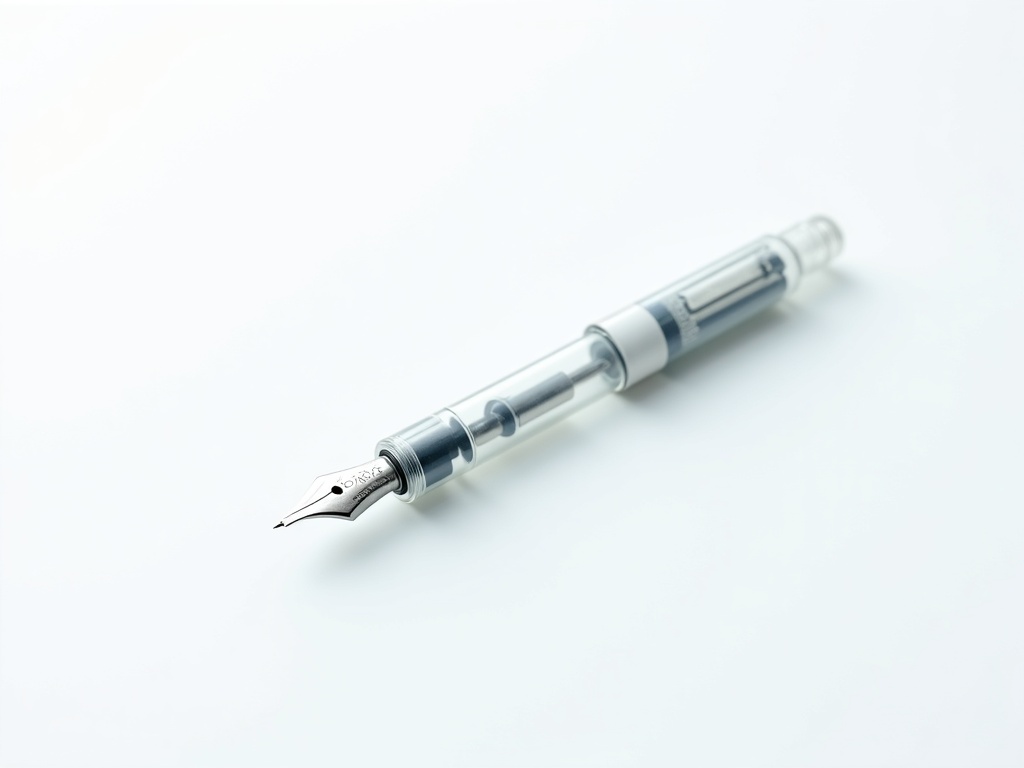
The Eco arrives in TWSBI’s characteristic minimalist packaging — a small box, a silicone grease packet (essential for maintaining the piston mechanism), and the pen. Pick it up and you immediately notice the clarity: the demonstrator body lets you see every drop of ink. It’s genuinely beautiful in a functional, engineered way.
Build quality is notably good for the price. The acrylic barrel is solid and feels substantial in hand. The piston mechanism operates smoothly and precisely — this is TWSBI’s core competency, and it shows. The threads connecting section to barrel are well-machined without the sharpness some budget pens exhibit. The clip is spring-loaded and grips securely without scratching materials.
At approximately 5.7 inches capped and 6.1 inches posted, the Eco suits medium to large hands particularly well. It’s on the lighter side — the acrylic construction keeps weight minimal. Writers who prefer heavier pens may find it too light for extended sessions; everyone else will appreciate how it disappears in the hand.
The Piston Filler System
The defining feature of the TWSBI Eco is its piston filling mechanism. Where most entry-level fountain pens use disposable cartridges or a clumsy converter, the Eco has a built-in piston that draws ink directly from a bottle. Twist the knob at the end of the barrel, submerge the nib, twist back — in seconds you have a full ink capacity of approximately 1.75ml.
That capacity matters. Inked up, the Eco can last weeks for moderate writers without refilling. No carrying cartridges. No fumbling with converters. The transparent body means you always know exactly how much ink remains. This is the feature that justifies the Eco’s existence in a market crowded with cartridge/converter pens.
The piston disassembles completely with the included wrench, making deep cleaning straightforward. TWSBI designs all their pens with maintenance in mind — a philosophy I deeply appreciate.
Writing Performance: Nib Quality
The Eco ships with a steel nib available in Extra Fine, Fine, Medium, Broad, and a 1.1mm Stub. I’ve personally tested the Fine and Medium extensively, and tried the Stub for calligraphy-style writing.
The Fine nib writes pleasantly wet — wetter than many fine nibs from other manufacturers, which suits the bold, saturated inks that fountain pen enthusiasts love. Line width is consistent with a smooth, controlled flow that rarely skips or hard-starts after brief rest periods.
The Medium nib is a genuine pleasure — smooth, wet, consistent. On quality paper like Rhodia or Leuchtturm1917, it glides. On cheaper paper it may feather with highly saturated inks, but that’s true of virtually any wet medium nib.
The 1.1mm Stub produces satisfying line variation — broad on down strokes, thinner on cross strokes — making it excellent for italic-style writing and note headers. For the price, the stub nib is exceptional value.
Nib performance on the Eco is generally reliable, though variation exists. Occasionally a unit ships with a nib requiring minor tuning. This is common across all steel nib pens at this price point and is easily addressed.
Ink Flow and Compatibility
The Eco handles virtually all standard fountain pen inks without issue. I’ve run everything from Pilot Iroshizuku to Diamine and Noodler’s through mine without problems. Avoid inks with large particles (some shimmer inks) or those that dry very quickly — the latter can cause hard starts with the larger ink channel.
Flushing between ink changes is easy thanks to the piston mechanism — fill with clean water, flush, repeat until clear. Full disassembly for deep cleaning takes under five minutes.
The TWSBI Eco vs. Competition
At its price point (~$32–$36), the Eco’s main competition includes the Pilot Metropolitan, LAMY Safari, and Platinum Preppy. The Metropolitan offers excellent build quality but uses a converter with limited capacity. The LAMY Safari is similarly priced with a distinctive design but uses cartridges/converter. The Eco’s built-in piston mechanism is a genuine differentiator — no other pen in this price range offers true piston filling.
Step up to the TWSBI 580 or Diamond 580 and you get refined aesthetics, slightly smoother mechanisms, and improved nib options — but at double or triple the price. For pure daily-driver value, the Eco holds its ground.
Who Should Buy the TWSBI Eco?
The Eco is ideal for: new fountain pen users who want to avoid the cartridge/converter ecosystem from day one; ink enthusiasts who want to explore bottled inks affordably; students and professionals who need a reliable daily writer; anyone who wants a large ink capacity pen for travel or extended writing sessions.
It’s less suited for: those who prefer light, pocket-sized pens; collectors focused on aesthetics over function; writers who need a very fine line (though the EF version is reasonably fine).
Where to Buy
The TWSBI Eco is available in multiple colors and nib sizes. Check current pricing and available color options on Amazon — the selection varies by season, and some colors sell out quickly.
I also recommend picking up a bottle of quality fountain pen ink when you order — the Eco deserves better than a cartridge.
Frequently Asked Questions
Is the TWSBI Eco good for beginners?
Yes, absolutely. The Eco is one of the best beginner fountain pens available. The piston filling system introduces you to bottled ink from day one, the build quality is reliable, and the writing experience is genuinely excellent for the price.
How long does the TWSBI Eco’s ink last?
The Eco holds approximately 1.75ml of ink — significantly more than most cartridge-converter pens. Moderate writers can expect two to four weeks per fill depending on nib size and writing frequency.
Does the TWSBI Eco need maintenance?
The piston seal should be lubricated with the included silicone grease every six to twelve months to keep it operating smoothly. Flush the pen when changing inks or storing for extended periods. Otherwise, it requires minimal maintenance.
What nib size should I choose for the TWSBI Eco?
For everyday writing, Fine or Medium are the most versatile choices. If you primarily take notes in small notebooks, Extra Fine. If you want something expressive and fun, the 1.1mm Stub is excellent. TWSBI’s nibs run slightly wet, so size down if you’re used to Japanese pens (where Fine is much finer than Western Fine).
Final Verdict
My TWSBI Eco review conclusion after years of carrying one: this pen punches significantly above its price class. The piston filler, ink capacity, build quality, and writing performance combine to create a value proposition that few budget pens can match. If you want to experience what fountain pen writing is really about — with real bottled ink in a well-made pen — the TWSBI Eco is where I’d start.
Scope, uncertainty & affiliate disclosure
Writing feel is personal. Product details can vary by version, and NibGuide does not imply that every item mentioned was personally purchased or tested.
Some links may be affiliate links. NibGuide may earn a commission at no added cost to you; this does not determine editorial conclusions.
Leave a Comment