
On this page
I still remember the moment I realized I’d made a terrible mistake. I was at my desk, carefully filling one of my favorite pens with a brand new bottle of ink I’d been excited about for weeks. The color looked perfect in the online photos—a deep, sophisticated blue-black. But as soon as I started writing, my heart sank. The ink was so dry it felt like dragging sandpaper across the page, and the color in reality was a muddy gray-purple that looked nothing like the marketing images. I’d just spent $25 on a 50ml bottle of ink I would never use.
That’s when I discovered fountain pen ink samplers, and they completely changed how I approach collecting ink. Instead of gambling on full bottles, I could try 5-10 different inks for the price of one bottle. It’s been a game-changer for my collection—and my wallet.
Why Ink Samplers Are Essential for Fountain Pen Collectors
The fountain pen ink world is astonishingly vast. There are literally thousands of ink options available, from dozens of manufacturers worldwide. Each ink has its own personality—flow characteristics, saturation, shading, sheening properties, dry time, water resistance, and of course, color. What looks gorgeous in a pen review video might be completely wrong for your writing style or paper.
Full bottles are expensive mistakes. A typical 30-50ml bottle of quality ink costs $15-30, with premium brands like Pilot Iroshizuku running $25-35. If you buy a bottle that doesn’t work for you, that’s money down the drain—most inks last years, so you’re stuck with it. I’ve seen collectors with shelves full of barely-used bottles representing hundreds of dollars in regret purchases.
Ink samplers solve this problem elegantly. For $10-20, you can try 5-10 different inks from a sampler set, getting enough of each (usually 2-4ml) to fill a pen several times and really evaluate the ink. You can explore different brands, colors, and properties without the commitment. Once you find an ink you love, then you commit to the full bottle. It’s the smart, economical way to build an ink collection.
Types of Fountain Pen Ink Samplers
Vial-Based Sampler Sets
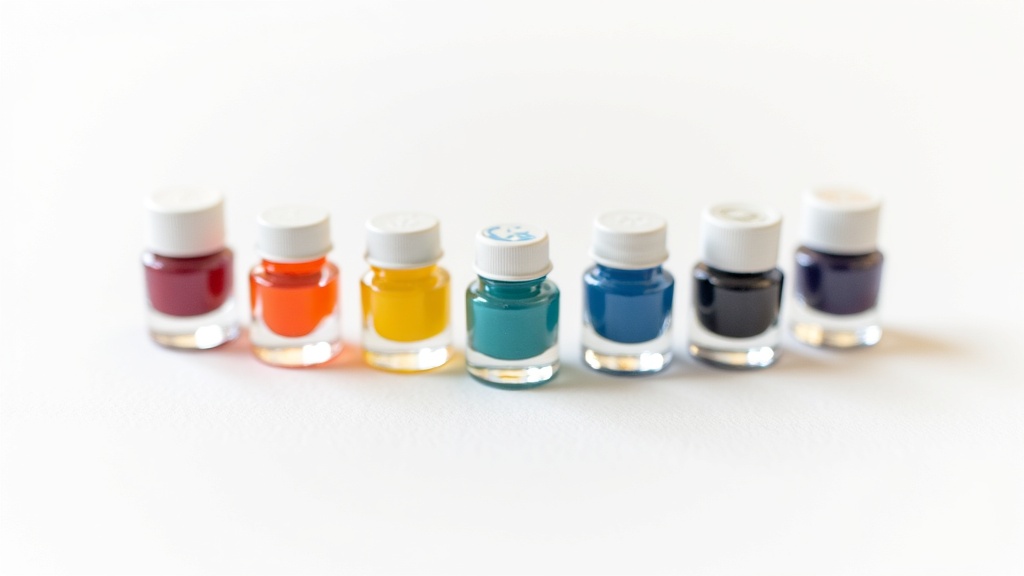
These are the most common type—retailers package small amounts of various inks into 2-4ml vials. Major fountain pen retailers like Goulet Pens, Vanness Pens, and JetPens offer extensive sampler programs. You can often build your own custom sampler set, choosing exactly which inks you want to try, or purchase pre-curated sets. The vials are typically clearly labeled with the ink name and brand, making it easy to track what you’re testing.
The quality of these samplers depends heavily on the retailer. Look for clean vials, proper labeling, and consistent fill levels. The best retailers use graduated vials so you can see exactly how much ink you have.
Brand Sampler Sets
Some ink manufacturers offer their own sampler sets featuring their product line. TWSBI offers ink sampler sets of their house brand inks. Diamine has curated sampler sets featuring popular colors from their extensive range. Pilot Iroshizuku occasionally releases sampler sets of their premium inks, though these are harder to find.
These brand samplers are excellent for exploring a specific manufacturer’s offerings. If you’ve tried one Diamine ink and liked the formula, a Diamine sampler lets you explore their color range with confidence in the base properties.
Curated Theme Sets
This is where samplers get really interesting. Specialty retailers create thematic sampler sets around specific characteristics: fall colors, sheening inks, blue-black comparisons, waterproof inks, fast-drying inks for lefties, vintage ink recreations—the possibilities are endless.
These themed sets are fantastic for targeted exploration. If you know you want a professional blue-black ink but aren’t sure which one, a blue-black sampler lets you compare 8-10 options side-by-side. If you’re fascinated by sheen (that rainbow effect some inks produce), a sheening sampler set introduces you to the best examples.
Community Swaps and Splits
The fountain pen community is remarkably generous. On forums like r/fountainpens and communities like The Pen Addict, enthusiasts regularly organize ink swaps and bottle splits. Someone with a full bottle will decant samples for others, either trading for other samples or selling at cost.
These community samplers can give you access to rare, discontinued, or regional inks you can’t find elsewhere. However, exercise caution—make sure you’re dealing with reputable community members, and be aware that these aren’t official retail transactions.
Top Fountain Pen Ink Sampler Sets
Based on my extensive testing and current market offerings, here are the sampler sets I recommend:
| Sampler Set | What’s Included | Price Range | Best For |
|---|---|---|---|
| Goulet Custom Sampler | Your choice of 5-10 inks, 2ml vials | $10-20 | Customization, beginners |
| Diamine Ink Discovery Set | 8 classic Diamine colors, 10ml bottles | $25-30 | Exploring Diamine range |
| Vanness Exclusive Samplers | Themed sets, 4ml vials, 5-6 inks | $12-18 | Themed exploration |
| JetPens Blue-Black Sampler | 8-10 blue-black inks, 2ml vials | $15-18 | Professional ink seekers |
| TWSBI Ink Sample Set | TWSBI brand inks, 4 colors, 10ml bottles | $20-25 | TWSBI pen owners |
Best for Beginners: Goulet Custom Sampler
If you’re new to fountain pens, the Goulet Pens custom sampler program is perfect. You choose exactly which inks you want to try—maybe a mix of blues, blacks, and one fun color. Each 2ml vial gives you enough to fill a pen 3-4 times. The website has excellent ink swabs and reviews to help you choose. At around $2 per sample, it’s incredibly economical.
My recommendation for beginners: start with 5 inks covering different use cases. Pick a professional blue-black, a true black, a fun blue, a warm color (brown or red), and one special effect ink (sheening or shimmering). This gives you a broad sense of what’s possible.
Best for Exploring a Brand: Diamine Ink Discovery Set
Diamine makes over 100 colors, which is overwhelming. Their discovery sets (when available) give you 8 classic colors in generous 10ml bottles—enough to really use the ink, not just test it. You get to experience Diamine’s reliable flow, good saturation, and relatively affordable pricing. If you like what you find, you know you can explore their full range with confidence.
Best for Themed Exploration: Vanness Exclusive Samplers
Vanness Pens creates exceptional themed sampler sets. Their “Sheening Inks” sampler includes 5-6 inks known for beautiful sheen. Their “Autumn Colors” sampler features warm oranges, browns, and reds perfect for fall. Each vial is 4ml—generous for samplers—and beautifully labeled. These sets are curated by people with deep ink knowledge, so you’re getting genuine expertise, not random selections.
Best for Professional Settings: JetPens Blue-Black Sampler
If you need an ink for work but want something more interesting than plain blue or black, JetPens’ blue-black samplers are invaluable. They typically include 8-10 different blue-black inks ranging from conservative navy to slate gray-blue. You can test them on your work documents and find the perfect professional ink that still has personality.
How to Properly Use Ink Sampler Vials
Getting the most from samplers requires some technique. Here’s my process:
Filling from small vials: Sample vials are too small to dip a pen into. Use a blunt syringe or pipette to draw ink from the vial and inject it into your pen’s converter or cartridge. This gives you cleaner fills and wastes less ink. A syringe kit costs $5-10 and is essential for serious sampling.
Cleaning between samples: Don’t contaminate your evaluation by mixing inks. Between samples, thoroughly flush your pen with water until it runs clear. For inks with different properties (like switching from waterproof to regular ink), use a drop of pen flush or dish soap in your rinse water to ensure complete cleaning.
Give each ink a fair test: Don’t judge an ink after one sentence. Fill a pen and use it for a few days. Test it on different papers—your everyday notebook, good quality writing paper, cheap copy paper. See how it performs under different conditions. Some inks are paper-dependent.
Document immediately: Write down your impressions while they’re fresh. Note the ink name, brand, your pen, the paper, and your observations about flow, color, shading, and overall performance. Your memory will fail you when comparing multiple samples.
My System for Tracking Ink Samples
After testing hundreds of inks, I’ve developed a tracking system that works for me. I use a simple spreadsheet with these columns:
- Ink Name & Brand: Full identification
- Date Tested: When I tried it
- Pen Used: Important because ink behaves differently in different pens
- Color Description: My actual perception, not the marketing description
- Flow: Dry/Medium/Wet rating
- Shading: Yes/No and how prominent
- Special Properties: Sheen, shimmer, water resistance, etc.
- Paper Performance: How it handled different papers
- Overall Rating: 1-5 stars
- Would Buy Full Bottle: Yes/No/Maybe
- Notes: Any additional observations
I also create ink swabs in a dedicated notebook—a few strokes of each ink on good paper with the name and date. Over time, this becomes an invaluable reference. You can flip through and visually compare inks you tested months apart.
Red Flags in Ink Samplers
Not all samplers are created equal. Watch for these warning signs:
Poor or missing labeling: If vials aren’t clearly labeled with brand and ink name, you’ll struggle to identify which ink is which. Some sellers use codes that require cross-referencing—avoid these unless the seller provides a clear key.
Inconsistent vial sizes: Professional operations use consistent vial sizes and fill levels. Wildly varying amounts suggest informal packaging that may not be clean or accurate.
Unknown sources: Be cautious of samplers from unknown sellers, especially on general marketplaces. Inks can be contaminated, mislabeled, or even diluted. Stick with reputable fountain pen specialty retailers or known community members with good feedback.
Excessive pricing: While samplers should cost more per milliliter than full bottles (you’re paying for the sampling service), they shouldn’t be outrageous. A 2ml sample of a $20 ink should cost around $2-3, not $8. Do the math before purchasing.
No seal or old-looking ink: Fresh ink samples should have clean vials and vibrant color. If the ink looks faded or the vials are dusty, these may be old samples that have degraded.
When to Commit to a Full Bottle
The purpose of sampling is to find inks worth buying in full bottles. Here’s my criteria for making that commitment:
I’ve tested it thoroughly: I’ve used the sample in at least two different pens and on multiple papers. I know how it behaves in different situations.
I keep wanting to use it: After the sample runs out, I find myself wishing I still had that ink. That’s a clear signal.
It has a specific purpose: Either it fills a role in my collection (my best professional blue-black, my favorite ink for journaling) or it’s special enough to justify owning despite overlap with other inks.
I’ve compared it to alternatives: I’ve tested similar inks and this one still stands out as superior for my needs.
The bottle size makes sense: If I loved a sample but only use that color occasionally, I might buy a smaller bottle (30ml instead of 80ml) to avoid waste. Some brands offer multiple sizes.
Generally, I aim to convert about 20-30% of my samples into full bottle purchases. If you’re buying bottles from every sample, you’re probably not being selective enough. If nothing ever makes the cut, you may need to expand your sampling range or reconsider what you’re looking for.
Start Your Ink Exploration Journey
Ink samplers transformed me from a timid collector afraid to try new things into someone who actively explores the vast world of fountain pen inks. The ability to test before committing removes the risk and makes the hobby more affordable and enjoyable.
Start with a small sampler set—maybe 5 inks in colors that interest you. Use them properly, document your experience, and let yourself discover what you actually enjoy rather than what you think you should like. The right ink for you is out there, and samplers are the best way to find it.
Your next favorite ink might be in a sample vial right now.
Frequently Asked Questions
How long do ink samples last?
Properly stored ink samples (sealed, away from direct sunlight and temperature extremes) can last several years. However, some properties like sheen may diminish over time. I recommend using samples within 1-2 years of purchase for the most accurate evaluation. Date your samples when you receive them.
Can I mix different ink samples together?
Technically yes, but I don’t recommend it unless you’re experienced with ink chemistry. Different inks have different pH levels and chemical compositions. Mixing them can create unpredictable reactions, sediment, or clogging. If you want to experiment with mixing, use small amounts in a separate container and test thoroughly before putting the mixture in a pen.
How much writing can I do with a 2ml sample?
A 2ml sample can fill most fountain pen converters 3-4 times. How much writing that represents depends on your pen’s wetness and nib size. With a fine nib and normal writing, you could easily write 20-30 pages. That’s more than enough to thoroughly evaluate an ink’s performance and decide if you want a full bottle.
Are ink samples safe for all fountain pens?
Generally yes, as long as you’re using fountain pen inks specifically (not calligraphy inks, India ink, or drawing inks). However, some inks like iron gall inks require special care and may not be suitable for all pens. Always research the specific ink, especially if it has special properties like waterproofing or shimmer particles. When in doubt, consult the ink manufacturer’s recommendations.
Where’s the best place to buy fountain pen ink samplers?
Specialized fountain pen retailers are your best source. Goulet Pens, Vanness Pens, JetPens, Anderson Pens, and Pen Chalet all offer excellent sampler programs with proper labeling and quality control. You can also find samplers on Amazon using this search for fountain pen ink samplers, though verify the seller’s reputation before purchasing.
Affiliate Disclosure: This article contains affiliate links, including Amazon Associate links. If you purchase through these links, I may earn a small commission at no additional cost to you. These commissions help support my ink testing and this website. I only recommend products I’ve personally researched or used.
Scope, uncertainty & affiliate disclosure
Writing feel is personal. Product details can vary by version, and NibGuide does not imply that every item mentioned was personally purchased or tested.
Some links may be affiliate links. NibGuide may earn a commission at no added cost to you; this does not determine editorial conclusions.
Leave a Comment