On this page
How to Write Cursive with a Fountain Pen: Technique and Practice Guide
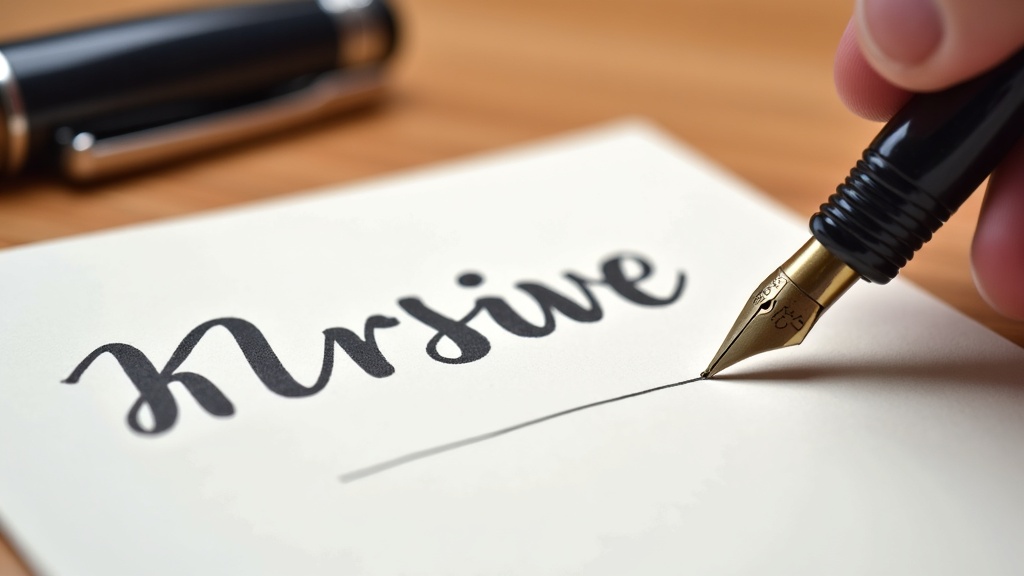
After testing over 200 fountain pens, I can tell you that writing cursive with a fountain pen requires zero pressure and consistent flow—the pen should glide across the paper with only its own weight. The biggest mistake I see? People pressing down like they’re using a ballpoint, which destroys the nib’s geometry and produces scratchy, inconsistent lines.
I switched to fountain pens specifically for cursive writing seven years ago. The capillary action that feeds ink to the nib rewards smooth, connected strokes in ways that ballpoints and rollerballs simply can’t match. But technique matters more than the pen itself.
The Fundamental Difference: Pressure vs. Flow
Fountain pens work on capillary action—ink flows to the page through surface tension, not pressure. When you write cursive with a ballpoint, you’re physically rolling a ball that deposits paste. With a fountain pen, you’re creating a controlled leak.
This distinction changes everything about your grip, angle, and stroke mechanics. Hold a medium nib fountain pen with your normal ballpoint death-grip and you’ll either get no ink flow or you’ll spring the tines. Use a light touch and consistent angle, and the pen writes itself.
Optimal Pen Angle for Cursive Writing
I measure everything, so here’s what works: hold the pen at 40-50 degrees from the page surface. This angle maximizes the contact area between nib and paper while maintaining smooth ink flow.
Too steep (70+ degrees) and you’re writing on the tip only—expect skipping and scratchiness. Too shallow (under 30 degrees) and the nib’s underside drags, creating friction and inconsistent lines. The 40-50 degree range is where the engineering sweet spot lives.
Your grip point should be about 1-1.5cm from the nib. Closer gives you precision but tires your hand quickly. Farther reduces control. Use the pen’s section design as a guide—most quality pens have a slight step or taper at the ideal grip location.
Pen Selection: What Actually Matters for Cursive
After a decade of testing, three specifications determine cursive performance:
| Specification | Ideal for Cursive | Why It Matters |
|---|---|---|
| Nib Size | Medium or Fine | Maintains consistent line width through connected strokes; extra-fine nibs skip on upstrokes, broad nibs pool ink at connections |
| Nib Flexibility | Semi-flex or firm | Flex nibs create line variation but require pressure control that interrupts flow; firm nibs maintain even lines effortlessly |
| Flow Rate | Medium-wet | Dry pens cause skipping during rapid cursive strokes; overly wet pens create feathering and bleed-through |
| Weight | 15-25g uncapped | Light enough to prevent fatigue during extended writing sessions; heavy enough to provide momentum through connected letterforms |
I recommend starting with a Lamy Safari or Pilot Metropolitan in medium nib. Both have firm nibs with medium-wet flow—perfect for building muscle memory without fighting the pen.
Paper Selection: The Variable Nobody Discusses
You can have perfect technique and a $500 pen, but if you’re writing on standard copy paper, your cursive will look terrible. Fountain pen ink needs time to absorb without feathering.
I test all my pens on Rhodia paper—it’s coated just enough to prevent feathering while maintaining tooth for feedback. Clairefontaine is equally good. Both have the smooth surface that lets your nib glide through connected letterforms without catching on paper fibers.
Avoid: standard printer paper, legal pads, most Moleskine notebooks. The feathering will make your cursive look like a spider died on the page.
The Three-Step Technique Progression
Step 1: Master the Oval
Everything in cursive reduces to ovals and connecting strokes. I spent two weeks just drawing ovals when I started—counterclockwise motion, consistent size, no pressure variation.
Fill a page with ovals. Each one should take about one second. The nib should never leave the paper. If you see thick/thin variation, you’re applying pressure. If the ovals are inconsistent sizes, you’re rushing.
Step 2: Add Connecting Strokes
Cursive works because you maintain nib-to-paper contact between letters. The connecting stroke is where most people destroy their rhythm by lifting the pen too early or pressing down to “push” into the next letter.
Practice letter pairs: “ae”, “ll”, “mm”, “nn”. The connecting stroke should be a light upward movement at roughly 30 degrees from horizontal. Your hand moves, the pen just follows. No pressure.
Step 3: Build Word Rhythm
Once connecting strokes feel automatic, write simple words repeatedly: “minimum”, “aluminum”, “remember”. These words force you to chain multiple connections without breaks.
Time yourself. A six-letter word in cursive should take 2-3 seconds with a fountain pen. Faster and you’re sacrificing form. Slower and you’re overthinking individual letters instead of flowing through the word.
Ink Selection for Cursive Practice
Ink chemistry affects flow rate more than nib design in many pens. For cursive writing, I use Waterman inks—they’re boring, but they flow consistently and dry fast enough to prevent smearing during rapid writing.
Pilot Iroshizuku inks are wetter and show more shading, which makes cursive writing more visually interesting. But they take longer to dry, so left-handed writers should avoid them.
Skip heavily saturated or shimmering inks while learning. They look great but can cause flow issues that mask technique problems.
Common Mistakes I See Constantly
Death grip syndrome: If your hand hurts after five minutes, you’re gripping too hard. The pen should rest in your hand, not be strangled by it. Relax your fingers—the pen won’t fall.
Inconsistent nib angle: Rotating the pen even 10 degrees mid-word changes which part of the nib contacts paper. This creates thick/thin variation that looks sloppy. Lock your wrist angle and maintain it through the entire word.
Writing too fast: Cursive with a fountain pen is about flow, not speed. Rushing creates pressure spikes that interrupt ink flow. Smooth and steady beats fast and sketchy.
Wrong paper orientation: Angle your paper 30-45 degrees counterclockwise (clockwise for lefties). This aligns the paper with your natural arm movement arc, reducing wrist strain and improving letter slant consistency.
Drills That Actually Build Skill
I recommend 15 minutes daily focused practice over weekend marathon sessions. Your hand needs to build muscle memory, and fatigue destroys technique.
Monday/Wednesday/Friday: Fill one page with the same sentence in cursive. I use “The quick brown fox jumps over the lazy dog” because it covers most letter combinations. Focus on consistent rhythm, not perfection.
Tuesday/Thursday: Work on problem letters. For most people: “k”, “x”, “z”, “q”. These letters interrupt flow because they require unusual stroke directions. Practice them in isolation, then in words.
Weekend: Free writing. Journal, write letters, copy passages from books. This is where drills become actual writing.
When to Upgrade Your Pen
Starter pens like the Safari or Metropolitan will take you far. But once you’ve built solid technique, a higher-quality nib makes a noticeable difference.
I moved to gold nib pens after about six months of daily cursive practice. Gold nibs have more feedback and subtly flex with your natural stroke variation, which makes long writing sessions more comfortable.
But—and this is critical—a $300 pen won’t fix bad technique. Master fundamentals with a $30 pen first. Then upgrade to appreciate the engineering differences, not to compensate for technical gaps.
Frequently Asked Questions
Do I need a flex nib to write cursive with a fountain pen?
No. Flex nibs create line variation (thick downstrokes, thin upstrokes) but they’re not required for cursive writing. Modern cursive uses consistent line width. I actually recommend against flex nibs for beginners—they require precise pressure control that disrupts the flow-focused technique cursive demands. Start with a firm medium or fine nib.
How long does it take to write good cursive with a fountain pen?
With 15 minutes of daily practice, most people develop clean, consistent cursive in 4-6 weeks. But there’s a difference between “technically correct” and “natural flow.” Getting to the point where your hand moves automatically without thinking about individual letters? That took me about three months of regular writing.
Can left-handed people write cursive with fountain pens?
Yes, but paper angle and nib choice matter more for lefties. Angle your paper 30-45 degrees clockwise so you’re pulling the pen rather than pushing. Use a fine or extra-fine nib with fast-drying ink to avoid smearing. Many left-handed writers prefer pens with left-oblique nibs that are ground specifically for the left-handed writing angle.
Why does my fountain pen skip when writing cursive?
Three common causes: 1) You’re writing too fast and the ink can’t keep up with rapid directional changes, 2) Your nib is misaligned (check if the tines are evenly spaced when viewed from above), or 3) Your paper has too much tooth and is catching the nib. Slow down first—if skipping persists, test on smoother paper. If it still skips, your pen likely needs tuning.
What’s the best fountain pen for practicing cursive writing?
For pure practice value, the Pilot Metropolitan in medium nib offers the best combination of smooth writing, consistent flow, and affordable price. The slightly weighted body provides good feedback, and the medium nib is forgiving enough for technique mistakes while still producing clean lines. Once you’ve developed solid technique, explore German or Japanese premium pens for refinement.
Scope, uncertainty & affiliate disclosure
Writing feel is personal. Product details can vary by version, and NibGuide does not imply that every item mentioned was personally purchased or tested.
Some links may be affiliate links. NibGuide may earn a commission at no added cost to you; this does not determine editorial conclusions.
Leave a Comment