
On this page
The Art of Journaling with a Fountain Pen: Why the Ritual Transforms Writing
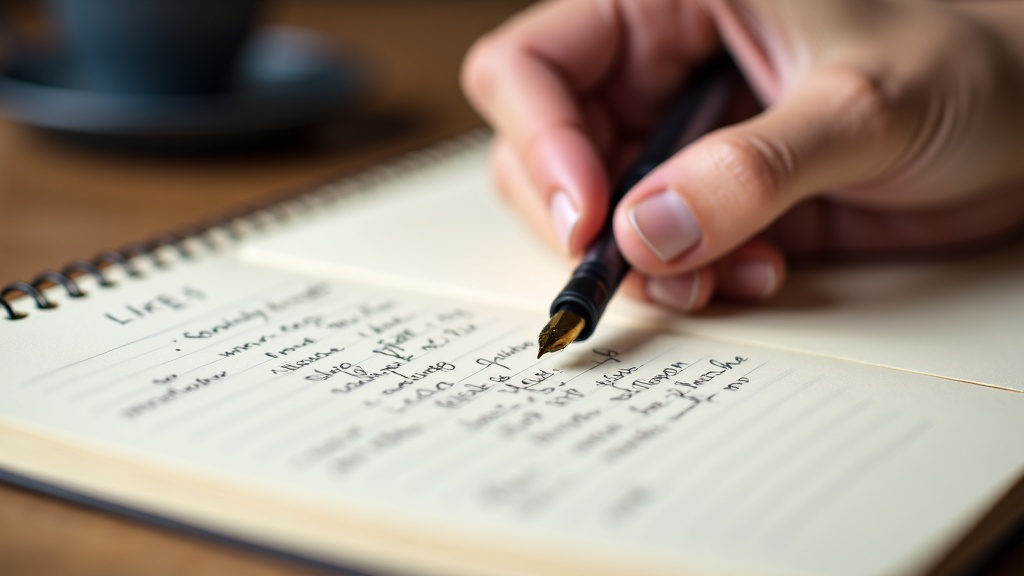
I’ve journaled with ballpoints, gel pens, and pencils, but nothing changed my relationship with daily writing like switching to a fountain pen. The simple act of uncapping, feeling the nib glide across paper, and watching ink flow transformed journaling from a productivity habit into something I actually look forward to.
After a decade of testing over 200 fountain pens, I can tell you that journaling with a fountain pen isn’t about pretension or nostalgia—it’s about creating friction in the right places and removing it in others. The ritual slows you down just enough to think, while the effortless writing keeps your hand from cramping three pages in.
Why Fountain Pens Change the Journaling Experience
The difference isn’t just aesthetic. When you press a ballpoint to paper, you’re forcing a tiny ball to rotate and dispense paste. Your hand bears that resistance for every word. With a fountain pen, gravity and capillary action do the work. You guide the pen; you don’t push it.
This matters more than you’d think for journaling. Most people abandon daily writing because their hand hurts or the process feels like work. A properly tuned fountain pen eliminates that physical barrier. I can write five pages of morning pages without my hand protesting—something that was impossible with my old gel pens.
The Ritual Creates Intention
Uncapping a fountain pen is a small ceremony. It signals to your brain that you’re transitioning into focused writing. I keep my journal and pen on my desk, cap aligned with the notebook. Each morning, the act of uncapping and writing the date becomes a threshold—I’m no longer checking email or scrolling, I’m writing.
This isn’t mystical thinking. It’s basic behavioral psychology. The more distinct rituals you build around a habit, the easier it becomes to maintain. A fountain pen and dedicated journal create that distinction in a way typing never could.
Choosing Your Journaling Fountain Pen
You don’t need a $500 pen to journal. You need reliability, comfort, and the right nib size for your writing style. Here’s what actually matters:
Nib Size: Broader Than You Think
Most people assume fine nibs are best for journaling to fit more on the page. Wrong. For sustained writing, a medium or even broad nib is more forgiving. Fine nibs require more precision and can feel scratchy on textured journal paper. Medium nibs glide easier and show off ink shading—which makes reviewing old entries more visually interesting.
If you have small handwriting, go Japanese medium (equivalent to Western fine). If you write larger, Western medium or broad works beautifully.
Cap vs. Snap Cap vs. Twist
For journaling, I prefer snap caps or slip caps over screw caps. Screw caps add 3-4 seconds to uncapping, which sounds trivial but multiplies over hundreds of journaling sessions. Pilot Metropolitan has a snap cap. Lamy Safari has a snap cap. TWSBI Eco has a screw cap—still excellent, but you’ll notice the difference.
If you journal in multiple short bursts, a retractable like the Pilot Vanishing Point is unbeatable. Click and write. No cap to manage.
Workhorse Pens for Daily Journaling
| Pen | Price Range | Best For | Why It Works |
|---|---|---|---|
| Pilot Metropolitan | $15-20 | Beginners, small writing | Reliable, smooth, snap cap, takes cartridges or converter |
| Lamy Safari | $25-35 | Larger hands, casual writing | Ergonomic grip, durable, swappable nibs, huge ink capacity |
| TWSBI Eco | $30-35 | High-volume journalers | Piston filler holds 2ml ink, clear barrel shows ink level |
| Platinum Prefounte | $10-15 | Travel journaling, budget option | Slip seal cap prevents drying, lightweight, smooth nib |
| Kaweco Sport | $25-30 | Pocket journaling, portability | Tiny when capped, full-size posted, fits in any pocket |
I’ve used all of these for extended journaling. The TWSBI Eco is my daily driver because I hate refilling mid-week, but the Pilot Metropolitan is what I recommend to anyone starting out. It punches way above its $20 price point.
Paper: Don’t Sabotage Your Setup
You can have a $300 pen and the experience will still be terrible if your paper can’t handle fountain pen ink. Look for paper rated at least 80gsm, ideally 100gsm or higher. Thicker paper prevents bleed-through and usually handles ink better.
Journal Recommendations
The gold standard is Tomoe River paper—thin but fountain pen friendly, with excellent shading and sheen. It’s my favorite for showing off ink properties. But it’s expensive and hard to find since the mill closed. For everyday journaling, Rhodia notebooks or Leuchtturm1917 journals are reliable and widely available.
Avoid cheap paper. If you can see text through the page when you hold it up, fountain pen ink will bleed through. Moleskine looks nice but their paper is inconsistent with fountain pens—sometimes it works, often it feathers badly.
Ink Selection for Journaling
Cartridges are convenient. Bottled ink is economical and gives you access to thousands of colors. For journaling, I recommend starting with cartridges to keep variables low, then graduating to bottles once you’re comfortable.
Stick With Well-Behaved Inks
Boutique inks with heavy shading or shimmer look amazing but can be high-maintenance. For daily journaling, you want inks that flow consistently, dry quickly, and won’t clog your pen if you skip a few days.
Safe bets: Pilot Iroshizuku (my go-to is Take-Sumi black or Kon-Peki blue), Diamine inks (huge color range, affordable), or Waterman inks (conservative but bulletproof reliability).
I use different ink colors for different types of entries—blue for daily logs, black for idea capture, green for quotes from books. This creates visual navigation when I flip through old journals.
Building the Journaling Habit with Fountain Pens
Start Small
Don’t commit to pages. Commit to uncapping the pen. Some days I write three pages. Some days it’s three sentences. The fountain pen makes even short entries feel worthwhile because the physical act of writing is pleasurable.
Keep Your Pen Ready
Store your pen horizontally or nib-up. If you’re using it daily, you don’t need to clean it between fills. Just keep writing. A pen that sits unused for weeks will dry out—fountain pens reward consistency.
Embrace Imperfection
Fountain pen ink isn’t erasable (unless you buy special erasable ink, but why). You’ll make mistakes. Cross them out. Keep moving. This was hard for me initially—I wanted perfect pages. But journals aren’t for perfection. They’re for thinking on paper. The permanence of ink actually helps; you can’t endlessly revise, so you learn to write and move forward.
Practical Considerations
Maintenance
Clean your pen when you change inks or if it sits unused for a month. Flush with water until it runs clear. Takes five minutes. That’s the entire maintenance routine for most pens.
Travel
Empty your pen before flying or fill it completely—partial fills can leak due to pressure changes. I carry a small pen case and my journal in my personal item. Never had TSA issues.
Cost Over Time
Initial investment: $30-50 for a good pen and journal. Ink costs roughly $10-15 per bottle, which lasts months of daily writing. Compare that to constantly buying disposable pens. The economics work out, but that’s not really the point—the experience is what justifies the setup.
Why This Matters Beyond the Pen
I’m a product designer. I work in Figma all day. Screens are my professional medium. But when I need to think clearly, I write longhand with a fountain pen. There’s research backing this up—handwriting activates different neural pathways than typing, improving memory and comprehension.
The fountain pen specifically adds a temporal element. You can’t write as fast as you type, which means you’re forced to think before you write. This filtering process produces clearer thoughts. My morning pages are slower and more deliberate than they were when I journaled in Google Docs.
The tactile feedback matters too. The scratch of nib on paper, the weight of the pen, the visual accumulation of ink on the page—these sensory inputs create a richer experience that makes the habit sticky. I’ve maintained daily journaling for four years now. I attribute at least half of that consistency to switching to fountain pens.
Frequently Asked Questions
Can I use a fountain pen if I’m left-handed?
Yes, with minor adjustments. Choose quick-drying inks like Noodler’s Bernanke or Pelikan 4001, which minimize smudging. Use an underwriter grip (hook your hand under the line) or try an extra-fine nib that puts down less ink. Many left-handed writers journal successfully with fountain pens—it’s about finding the right combination of pen, ink, and paper.
How do I prevent ink from bleeding through my journal pages?
Use thicker paper (100gsm or higher) and fountain pen-friendly journals like Rhodia, Leuchtturm1917, or Clairefontaine. Pair your paper with well-behaved inks—avoid heavily saturated or “wet” inks if you notice bleeding. A finer nib size also helps by depositing less ink on the page.
What’s the best fountain pen for beginners who want to journal?
The Pilot Metropolitan offers the best combination of reliability, smooth writing, and low cost ($15-20). It uses standard cartridges so there’s no messy filling, but you can add a converter later for bottled ink. The medium nib is forgiving and works well on most papers. I’ve recommended this pen to dozens of people and haven’t had a single complaint.
Do I need expensive ink for journaling?
No. Affordable inks like Diamine ($8-12 per bottle) or Pilot cartridges ($6 for a pack) work excellently for journaling. Expensive inks offer more color variety and special properties like shading or sheen, but they don’t write better for everyday use. Start with a basic black or blue, then explore colors once you’ve established the habit.
How often do I need to clean my fountain pen if I use it daily?
If you’re using the same ink and writing daily, you can go months without a deep clean. Just flush with water when you change ink colors or if the pen starts writing dry. For daily journaling, maintenance is minimal—fountain pens actually perform better with regular use than sitting idle.
Scope, uncertainty & affiliate disclosure
Writing feel is personal. Product details can vary by version, and NibGuide does not imply that every item mentioned was personally purchased or tested.
Some links may be affiliate links. NibGuide may earn a commission at no added cost to you; this does not determine editorial conclusions.
Leave a Comment