
On this page
After testing over 200 fountain pens, I can tell you that a pen refusing to write is almost never a manufacturing defect. Nine times out of ten, it’s dried ink, air bubbles, or simple user error—all fixable in under five minutes.
I’ve diagnosed this problem countless times with my own collection and for friends who panic-text me photos of “broken” pens. Here’s the systematic troubleshooting process I use, ranked from most common to least common causes.
The 30-Second Quick Fixes (Try These First)
Before you start disassembling anything, run through this checklist. I’ve solved more problems at this stage than any other:
1. Check Your Ink Flow Path
Shake the pen gently with the nib pointing down. You should see ink flowing toward the feed. If the pen has been sitting idle or traveled in a bag, air bubbles can block the feed channels. A gentle shake redistributes ink and usually clears minor blockages.
2. Prime the Nib on Paper
Hold the pen at a 40-45 degree angle and make small circles on scrap paper with moderate pressure. Not enough to spring the tines, but enough to encourage ink flow. This works because it draws ink through the feed via capillary action. I’ve revived supposedly “dead” pens this way dozens of times.
3. Verify the Converter or Cartridge
Remove the converter or cartridge and reattach it firmly. A loose connection creates an air gap that prevents ink flow. With cartridges, you should hear a distinct click when they seat properly. With converters, check that the threads are fully engaged.
Common Culprits: Dried Ink and Clogged Feeds
If quick fixes didn’t work, you’re likely dealing with dried ink. This is the #1 reason pens fail to write after sitting unused for weeks or months.
The Cold Water Flush
Disassemble your pen and run the nib and feed under cool tap water. I use room temperature water—never hot, which can warp plastic feeds or damage celluloid barrels. Let water flow through the feed channels for 2-3 minutes while gently flexing the feed to dislodge dried ink.
For stubborn clogs, I soak the nib and feed in a cup of cool water overnight. By morning, even India ink residue usually dissolves enough to restore flow.
The Ammonia Solution (Nuclear Option)
When water alone won’t cut it, I mix a 10% ammonia solution: 1 part household ammonia to 9 parts water. Soak the nib section for 4-6 hours. The ammonia breaks down dried ink particles that water can’t touch.
Warning: Never use ammonia on pens with celluloid or hard rubber components. It will damage these materials irreversibly. Stick to modern resin pens only.
For ultrasonic cleaning, a jewelry ultrasonic cleaner works wonders. Fill it with water and run the nib section through 2-3 cycles. The ultrasonic vibrations dislodge particles from feed channels that manual cleaning misses.
Mechanical Issues: When It’s Not the Ink
If your pen still won’t write after cleaning, you’re dealing with a mechanical problem. Here’s how to diagnose it:
Nib Tine Alignment
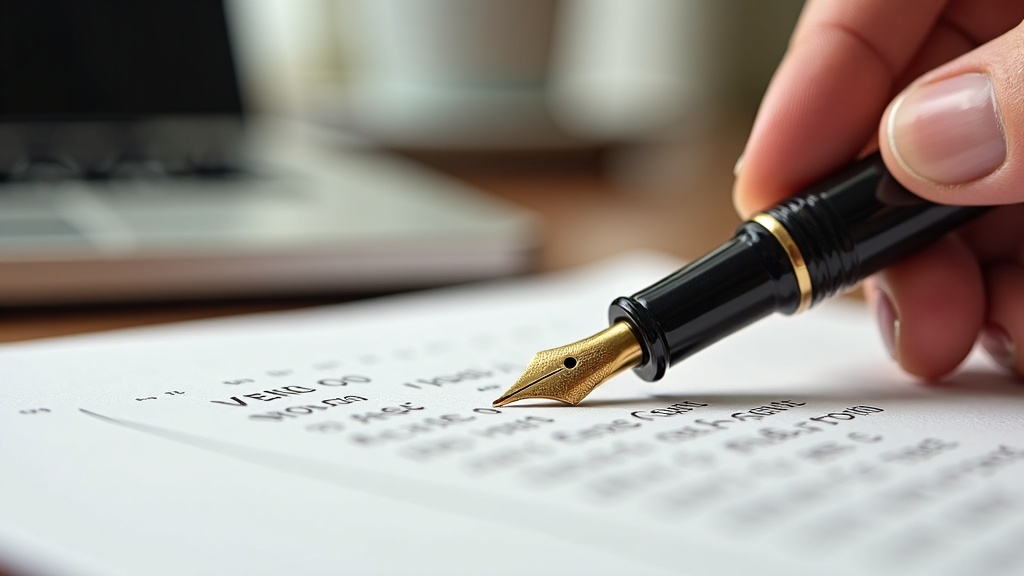
Hold the nib up to a light source and look straight down the tip. The tines should meet perfectly with no visible gap. If you see light between them, the nib is misaligned—usually from a drop or excessive pressure during writing.
You can attempt gentle realignment yourself by placing the nib on a hard surface and applying even pressure with your thumb. But honestly? Unless you’ve done this before, send it to a nib meister. I’ve ruined more than one nib trying to save $30 on professional repair.
Feed Positioning
The feed should sit flush against the underside of the nib with no gaps. If the feed has shifted backward (common in friction-fit assemblies), it won’t deliver ink to the tip consistently. You’ll get skipping or hard starts.
Remove the nib and feed, then reseat them carefully. The feed’s fins should align perfectly with the nib’s breather hole. Some pens require gentle pressure to snap everything into place.
Baby’s Bottom
This is a manufacturing defect where the tipping material is over-polished, creating a rounded tip that doesn’t make full contact with paper. You’ll see ink in the pen but nothing transfers to the page.
Testing for baby’s bottom: write on high-quality smooth paper at various angles. If the pen only writes with heavy pressure or at extreme angles, baby’s bottom is likely the culprit. This requires professional grinding to fix—there’s no DIY solution.
Troubleshooting by Symptom
| Symptom | Most Likely Cause | Fix |
|---|---|---|
| Pen writes, then stops after a few words | Air bubble in feed or low ink | Shake gently, refill ink, or prime with small circles on paper |
| Pen won’t write at all, but ink is visible | Dried ink clog or baby’s bottom | Flush with water, soak overnight, check nib for over-polishing |
| Pen skips on downstrokes but writes on cross-strokes | Tine misalignment or feed positioning | Check tine alignment under light, reseat nib and feed |
| New pen never wrote properly | Manufacturing oils in feed channels | Flush thoroughly with water and dish soap solution |
| Pen writes only with extreme pressure | Baby’s bottom or severely dried ink | Deep clean with ammonia solution or professional nib work |
Ink-Specific Problems
Not all inks behave the same way. I’ve learned this the hard way through years of testing:
Shimmer Inks and Pigmented Inks
These are beautiful but problematic. The shimmer particles or pigments settle in feed channels and create clogs that water alone won’t clear. If you use shimmer inks, clean your pen weekly—not monthly.
I keep pen flush cleaning solution on hand specifically for shimmer ink maintenance. It’s more effective than water and gentler than ammonia.
Iron Gall Inks
These historical formulations can corrode steel nibs if left to dry in the pen. If you write with iron gall inks (and I do, despite the risk), never let them sit in a pen for more than a week. The acidic chemistry etches metal over time.
Old or Expired Ink
Ink doesn’t last forever. After 3-5 years, dyes break down and particles form. I’ve seen ancient inks clog feeds beyond repair. If your ink smells off or shows sediment, toss it. The $15 you save isn’t worth a $200 pen repair.
Preventive Maintenance
Most “broken” pens are actually neglected pens. Here’s my maintenance schedule for keeping 40+ pens in rotation:
- Daily writers: Flush every 2 weeks with water, or weekly if using shimmer/pigmented inks
- Occasional pens: Flush before putting away. An empty, clean pen stores indefinitely. A filled pen becomes a problem in 30 days.
- Deep storage: Disassemble completely, clean all parts, store in individual pen storage cases away from light
I rotate through my collection systematically. Each pen gets used at least once a month, which prevents ink from drying in the feed. It’s easier to maintain flow than to restore it.
When to Seek Professional Help
I’m a proponent of DIY repairs, but some problems require expertise I don’t have:
- Broken tines (separated or cracked nib tips)
- Damaged feed fins (cracks or chips in the feed channels)
- Piston or vacuum filler mechanisms that won’t seal
- Vintage pens with original parts you can’t replace
A professional nib meister charges $30-50 for basic tuning and $75-150 for major work. Considering that a botched DIY repair can total a $200+ pen, I don’t hesitate to send out work when I’m uncertain.
Frequently Asked Questions
Why does my fountain pen work sometimes but not others?
This is classic air bubble behavior. Temperature changes, altitude shifts, or carrying the pen in different orientations can introduce air into the feed. Prime the pen with small circles on paper to re-establish capillary flow. If it happens constantly, your converter may have a poor seal—try replacing it.
Can I use tap water to clean my fountain pen?
Yes, but with caveats. I use filtered tap water to avoid mineral deposits. If you have hard water, use distilled water instead. Minerals accumulate in feed channels over time and restrict flow. I’ve disassembled pens with visible white buildup from months of tap water flushing.
How long can I leave ink in a fountain pen?
For standard dye-based inks, 30 days maximum if you’re not using the pen. Beyond that, ink starts evaporating and concentrating in the feed. Pigmented and shimmer inks: 7-14 days tops. Iron gall inks: use them or lose them within 7 days. These timelines assume sealed cap storage at room temperature.
My pen stopped writing after a flight—is it damaged?
Almost certainly not damaged, just pressurized. Altitude changes force ink out of the feed or introduce air bubbles. Clean any leaked ink from the cap and section, then prime the nib on paper. The pen should return to normal within a few lines. For frequent flyers, I recommend traveling with pens completely full (no air space) or completely empty.
Do expensive pens write better than cheap pens?
Not always, and this frustrates me. I have $15 pens that write perfectly out of the box and $300 pens that needed professional tuning before they were usable. Price correlates with materials and craftsmanship, not necessarily with writing performance. A well-tuned $30 pen outperforms a poorly-adjusted $500 pen every time. Focus on nib quality and proper setup, not brand prestige.
Scope, uncertainty & affiliate disclosure
Writing feel is personal. Product details can vary by version, and NibGuide does not imply that every item mentioned was personally purchased or tested.
Some links may be affiliate links. NibGuide may earn a commission at no added cost to you; this does not determine editorial conclusions.
Leave a Comment