On this page
I’ve tested enough pens, nibs, and inks to know this question matters more than it first appears. If you are trying to figure out whether a fountain pen, an ink, and a paper stock actually work well together, the fastest method is not a long journaling session. It is a short, repeatable test page that lets you see dry time, feathering, bleedthrough, smoothness, and line character in a few minutes.
A lot of frustration comes from changing too many variables at once. A pen that feels perfect on one notebook can become scratchy or messy on another, and an ink that looks rich on coated paper can turn flat on cheap copy paper. A simple test routine gives you a clear answer before you commit to filling converters, buying more paper, or blaming the nib for a problem caused somewhere else.
The Short Answer
The quickest reliable test is one sheet of paper, one filled pen, and one structured set of writing samples: a few lines of normal writing, a row of fast strokes, a couple of pauses for ink pooling, and a quick check of the back side. That is enough to show whether the combo is practical for everyday writing or only pleasant under ideal conditions.
If you want a baseline, keep one known paper and one known ink on hand. Then change only one variable at a time. Test a new pen on familiar paper first, test a new ink in a familiar pen second, and only then test new paper. That order helps you identify the real source of a problem in minutes instead of guessing for days.
Why This Matters More Than Most Beginners Think
People often shop for pens as if the pen alone determines the writing experience. In practice, what reaches the page is the result of three parts interacting at once. A broad wet nib, a lubricated ink, and absorbent paper can behave nothing like the same pen loaded with a drier ink on better stock.
- Paper changes how sharp or fuzzy the line looks.
- Ink changes flow, saturation, shading, and dry time.
- The nib determines line width, feedback, and how much ink reaches the page.
- Your writing speed affects smearing and whether the setup feels controlled or messy.
Once you understand that, testing becomes much more efficient. You stop asking whether a pen is good in the abstract and start asking whether this particular combination suits the way you actually write.
The reason this topic matters is that nib size quietly changes almost everything a beginner notices first: smoothness, control, ink flow, dry time, and how forgiving the pen feels on ordinary paper. People often assume nib width is just a style preference, but in practice it changes the whole learning curve.
I have also found that beginners blame the pen when the real mismatch is width versus paper or width versus handwriting size. A nib that feels expressive to one person can feel messy, slow-drying, or oddly broad to someone who writes smaller or uses cheap office paper every day.
That is why I treat nib size as a practical fit question, not a collector trivia question. The right width makes the pen easier to trust, which is a big deal when you are still deciding whether fountain pens are enjoyable enough to keep using.
What I Look for First
When someone is buying their first setup, I would rather they compare fountain pen ink and bottled fountain pen ink than chase random luxury-looking listings that do not teach them what they actually like.
My first pass is always practical, not obsessive. I am not trying to produce a lab report. I want to know whether the setup is usable, comfortable, and predictable. A fast test page should answer four questions immediately.
- Does the pen start easily and keep up with normal writing?
- Does the line feather or spread wider than expected?
- How long does the ink take to become smear-safe for your pace?
- Is there show-through or bleedthrough bad enough to limit both-side use?
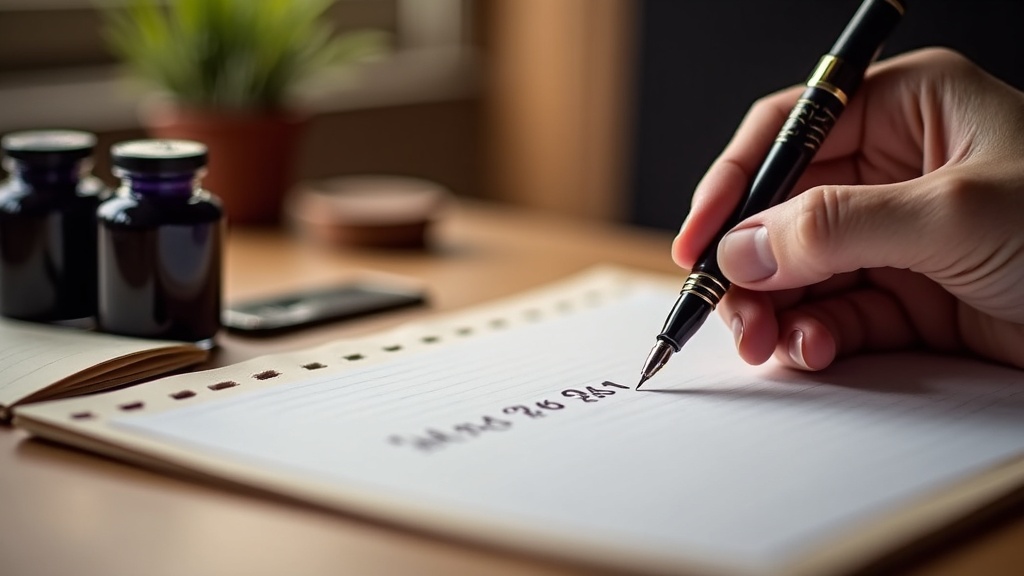
To check all of that quickly, write one sentence in your normal hand, draw a few fast loops and cross-strokes, add a solid scribble or two where ink can pool, then touch a finger or scrap sheet to the line at five, ten, and twenty seconds. Flip the page over and inspect the back immediately. That one routine reveals most of what matters for daily use.
How to Choose Without Overbuying
The cheapest way to find a good combo is to build around one stable reference point instead of buying random upgrades in every category. Most writers need fewer variables, not more.
- Keep one dependable notebook or paper pad as your control sample.
- Keep one well-behaved ink for comparing new pens.
- Test new inks in a pen whose flow you already understand.
- Sample before buying full bottles or large paper packs whenever possible.
If a setup fails, resist the urge to replace everything at once. A slightly drier ink may fix feathering. A finer nib may solve slow dry times. Better paper may make the same pen look dramatically cleaner. Small controlled tests are what prevent expensive, unnecessary purchases.
If you are buying blind, I think the smartest move is to choose the nib that solves your most common writing problem instead of the one that looks most interesting online. For many beginners that means a fine or medium nib from a reliable brand, because it leaves room to learn without locking you into a fussy setup.
I would also avoid treating a first pen like a forever pen. Your first good fountain pen should teach you what you notice: line width, feedback, ink flow, grip comfort, and paper sensitivity. Once you know which of those bothers or delights you, later purchases get much smarter and usually cheaper.
That is also why I rarely recommend chasing gold nib mystique or boutique hype right away. A well-tuned beginner steel nib can teach you more about your preferences than an expensive pen you are too nervous to use hard enough to learn from.
Common Mistakes and Misconceptions
The biggest mistake is doing a long writing session and calling that a test. Long sessions are useful after you already know the combo is viable, but they are slow for diagnosis. Another common error is testing on paper that is too different from your real use case. If you mostly write at work on office paper, a premium journal tells you only part of the story.
It is also easy to assume more expensive always means better. In reality, some premium inks dry too slowly for left-handed writers, some broad nibs are simply too wet for cheap paper, and some inexpensive paper performs surprisingly well with the right ink. The goal is not the fanciest setup. The goal is the combination that behaves consistently for your habits.
The biggest misconception is that broader always means smoother and therefore better. Broader nibs can feel smoother, but they also dump more ink, show more paper weakness, and create longer dry times. That tradeoff is worth it for some writers and deeply annoying for others.
Another mistake is trusting brand labels as if every fine or medium were standardized. They are not. A Japanese fine can feel closer to a Western extra-fine, and two medium nibs from different makers can still land in very different places on the page. That is why example use cases matter more than marketing words.
I also think people underestimate how much ink choice changes the perception of nib size. A wet ink in a medium nib can behave more broadly than expected, while a drier ink can calm down a pen that initially feels too generous.
Bottom Line
The fastest way to test a pen, ink, and paper combo is to use a single repeatable page that isolates normal writing, fast strokes, pooled ink, dry-time checks, and a back-page inspection. In under five minutes, you can tell whether the combo is clean, comfortable, and useful.
Keep one known pen, one known ink, and one known paper as your baseline, then change only one variable at a time. That simple habit will teach you more than any spec sheet and help you build a setup you actually enjoy using.
If you want the safest beginner answer, I would still lean fine or medium before anything more extreme. Those widths usually give you enough character to enjoy the pen without forcing you to manage every downside at once.
From there, the smartest upgrade path is not buying more expensive immediately. It is noticing whether you want a cleaner line, more expressive ink behavior, less feedback, or more control on cheap paper. Once you know which direction you want to move, choosing the next nib size becomes dramatically easier.
Extra Context That Changes the Decision
I also think the wrong choice usually comes from chasing one spec in isolation. In practice, nib feel, dry time, paper tolerance, maintenance burden, and total cost all interact, so I prefer to weigh them together before I recommend anything.
That is why I keep coming back to fit and tradeoffs instead of one-size-fits-all advice. A pen or ink can be technically good and still be wrong for the way you actually write, the paper you use most, or the amount of maintenance you are willing to do.
What Changes the Answer in Real Use
The detail most beginners miss is that fountain-pen advice only sounds simple until you factor in handwriting pressure, paper quality, nib width, and how much maintenance you will actually tolerate. Those variables are why one recommendation can feel perfect for one person and annoying for another.
When I test pens or inks, I am usually asking which part of the experience will break first for a newer user: inconsistent starts, feathering on mediocre paper, grip discomfort, dry-time frustration, or refill hassle. That practical filter usually produces a better recommendation than chasing prestige or internet hype.
I also think beginners improve faster when they judge the whole setup rather than the pen in isolation. A conservative nib, decent paper, and predictable ink often teach you more in two weeks than a flashier pen that keeps introducing avoidable variables.
Scope, uncertainty & affiliate disclosure
Writing feel is personal. Product details can vary by version, and NibGuide does not imply that every item mentioned was personally purchased or tested.
Some links may be affiliate links. NibGuide may earn a commission at no added cost to you; this does not determine editorial conclusions.
Leave a Comment